

When I still had a mother, I would make a big deal of Mother’s Day.
Read more: My Mother’s DayBuying the books, I thought she’d like, taking her out for Devonshire tea at a twee cafe in the Dandenong Ranges, or to a film I thought she might like. Looking back, I realise, with the benefit of hindsight, motherhood and late developing empathy, that we did what I wanted. I don’t recall asking her. Maybe I did; I hope I did.
In my case, on Mother’s Day just gone, I gave a month’s notice that I wanted to go away for the weekend -as a family. I would choose where and all they had to do was come along. I took the deadly silence to be acquiescence. Encouraged, I began to research and of course, picked a destination 4 hours away and chose to camp.
We drive up the Calder Highway, with our scruffy dog in tow. She seems confused but happy. When was the last time we’d gone away as a family – six years perhaps? Time and young adulthood meant those family trips were just a memory.
Nothing has really changed except there’s the new dog, new music on the playlist and we’re heading up to Sea Lake. The country unfolds before us. It is all sheep and wheat, browned-off paddocks, and rusty old cars. A certain terrible beauty in it all. We eat at country bakery after country bakery looking for the perfect meat pie and vanilla slice. In Wedderburn, we explore the second-hand shops – one has a collection of chamber pots for sale. With great excitement, I was informed that there was an Australian Crawl vinyl album (Sirocco). We stop at the silo in Nullawil – the one of the farmer and his favourite working dog. No one is around except us and a friendly kelpie who materialises from nowhere gets many pats and then disappears when we leave.
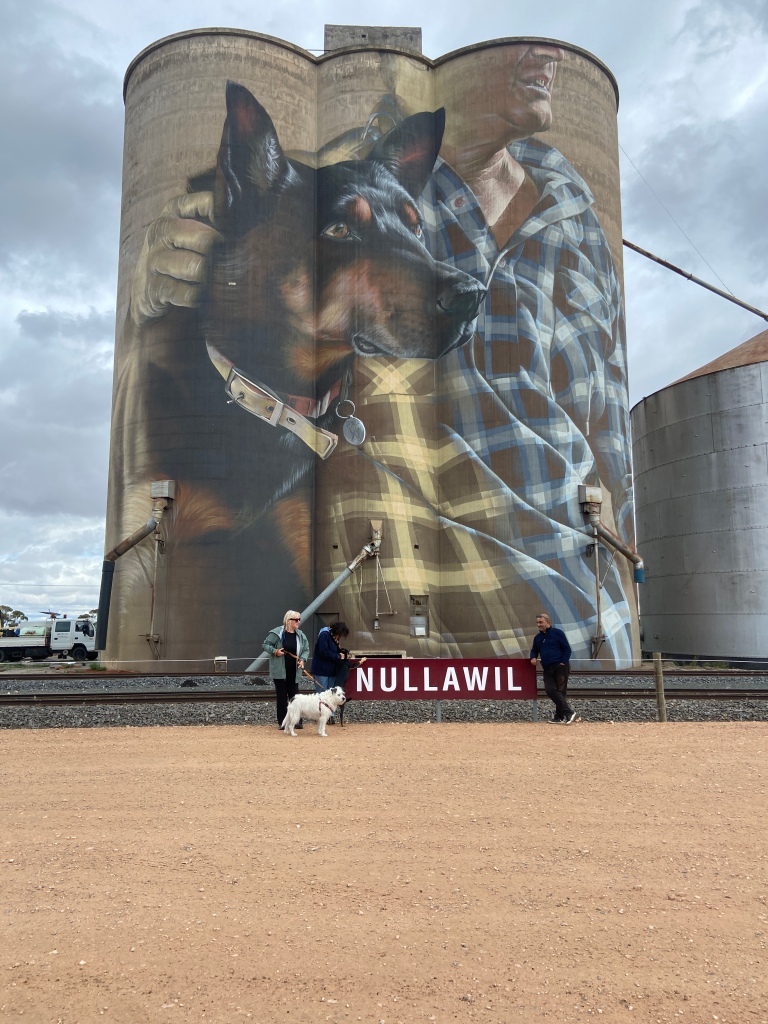
The earth is flatter and the sky is bigger out here. The nothingness and the flatness and the shimmering horizons mesmerise my young urban adults.
We pitch the tents, bang up against the camp kitchen so we don’t have to wander far to boil the kettle. Two little tents amongst the RVs belonging to the grey nomads. There are old vans retrofitted not as fancy as their shiny cousins. Little curtains flap in the late afternoon breeze, and there’s a vase of flowers on a camp table.
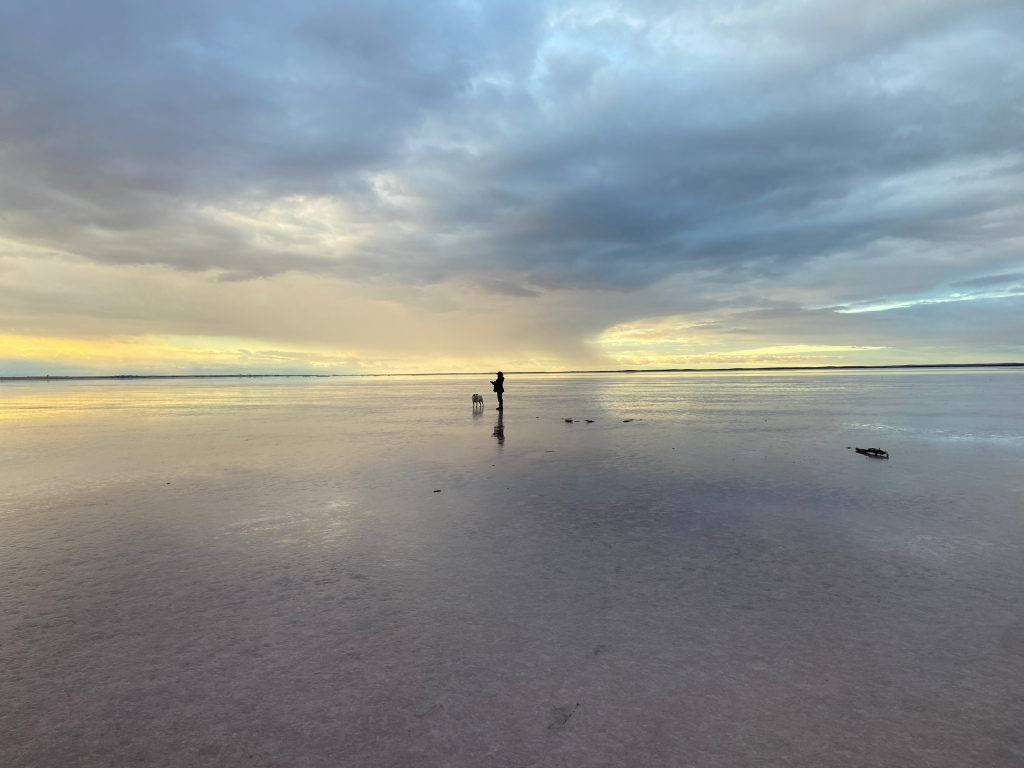
We drive out to Lake Tyrrell, the salt lake on the edge of town. Our dog sniffs at the salt and looks like a white wolf as she runs across the crusty surface. My daughters walk far out into the lake, silhouetted against a pre-sunset sky. It looks like they are standing in front of a water colour canvas- the largest one I’ve ever seen, ever will see.
We head to the Sea Lake pub, one of those with a first-floor balcony and clean, simple rooms. The local community wouldn’t let the pub die. We see some of the grey nomads from the caravan park, some girls in finery before heading off to the local debutante ball, and football teams dissecting the afternoon match. The kitchen is closed as the pub is in between chefs, but there’s a food truck from Mildura selling kebabs at $20 a pop, and they go down well. My husband and I walk back to the caravan park, leaving our daughters to hang out with the debutantes and the footy players. We hunker down and listen to a podcast and (as usual) I drift off to sleep.
I am woken by a daughter bashing at the tent and asking, “Mum, why is the sky a pink colour at this hour?’
‘Must be the apocalypse’, I respond and pull out my phone to check.
I read a couple of Facebook posts and then the pink sky makes sense. I am out of my sleeping bag, so fast I surprise myself.
‘Australis, Southern Lights,’ I screech.
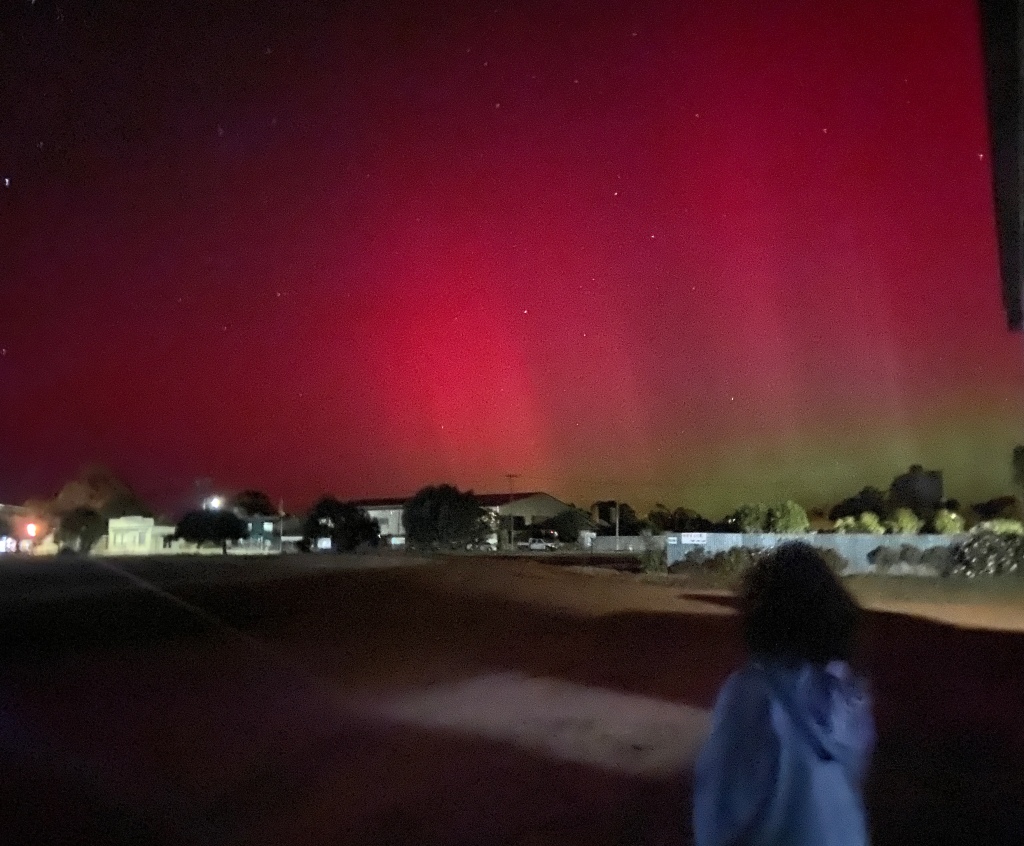
We stand looking at the southern sky. Shades of shimmer, pink, and red, and undefinable The stars sweep and tilt above – the Milky Way in all its smudgy glory. We stand there till it starts to fade and we are tired of looking at it through our camera screens.
In the middle of the night when the Australis has faded to a pink tint, an argument breaks out a few streets away and there’s back and forth between a group of men. It dies down and I fall asleep only to be pounded awake by our unsettled dog with tummy ache. For her, I walk around Sea Lake at 4am through the empty streets. Happy Mother’s Day to me I think as we pace up and down. Appropriate really that I’m up in the wee small hours with a (fur) child – it’s what mothers do.
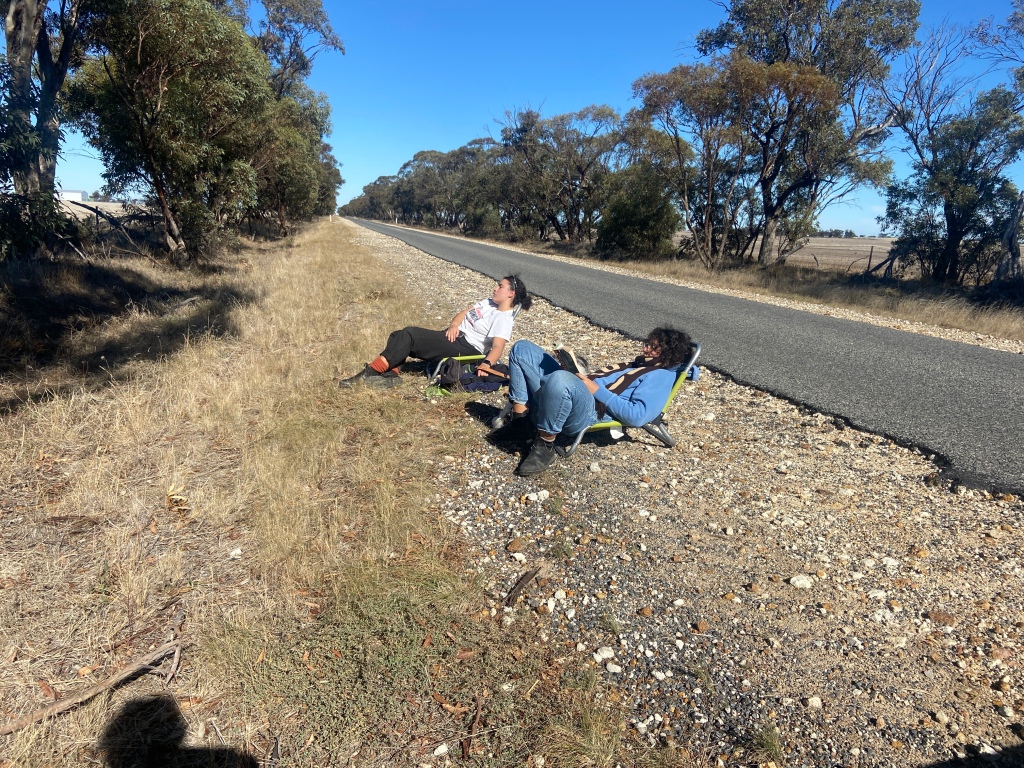
This middle-of-the-night adventure was probably an omen that the day was not to go as planned. Instead of a leisurely drive down the Silo Art Trail and winding up at the Stick Shed in Murtoa- our car conks out on a back road and we sit on the verge waiting for the RACV bloke. He arrives, diagnoses the problem, and says a new part is required and it’ll take a couple of days. He loads us, the car and the dog onto his truck and we bounce over the back roads to Charlton. He arranges a loan car- a 25-year-old Holden Astra that will go like the clappers – despite its rough-as-guts appearance.
He waves us off, saying, ‘I’ll text ya when it’s fixed. Probably three days. Memorable Mother’s Day for you eh?’
It sure was.


 The Pelvic Floor Coffee Club